

Delivered via a 5-stage codified process
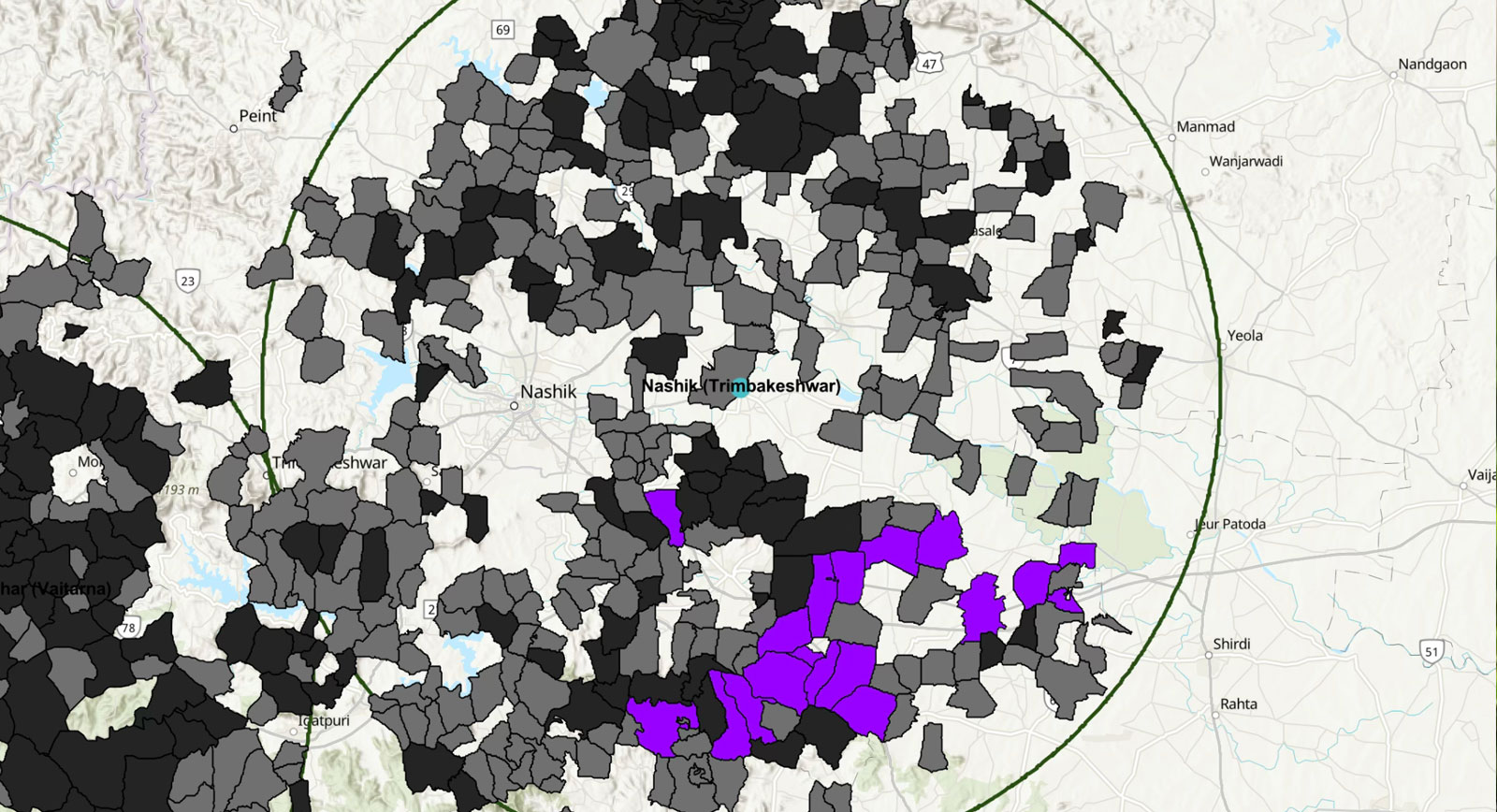
Baseline / Opportunity: A tech-enabled assessment is the starting point to focus efforts on stress areas by mapping fallow land across GPs within a Circle and categorising the opportunity into very high, high, and medium potential where MFF can be adopted
Scope of Engagement: GP clusters are finalised using a denominator–cum–mosaic approach. The denominator builds on engaged and confirmed GPs where community readiness is already in place, while the mosaic expands into new GPs based on Circle targets. Together, this creates a scope that is both implementation-ready and aligned with scale
Confirm Community: Community ownership is confirmed through a tech-enabled on-ground community engagement that validates MFF potential and gauges community interest
Deliver Operations: MFF operations are delivered through three stages – pre-ops, ops, and post-ops – across each phase of MFF. Pre-ops sets up all documentation, approvals, and processes required to initiate work; ops ensures efficient and cost-effective execution on the ground; and post-ops audits and validates the work completed.
The four phases of MFF are:
A) Prepping of land
B) Planting of saplings
C) Planting of intercrops and nutrition patches
D) Harvesting